Correct Order
Arrange items in the right order: the live sequencing quiz for timelines, processes and rankings. Scored on speed and accuracy. Free for classes and training.
- Family
- Quiz
- Scoring
- Scored
- Best for
- Scored · Quizzes
- Ready-made games
- 26
You play as a player, straight away. No sign-up.
Top games in this format
26 games See all games in this format
Run Correct Order with your group
Host it live from your screen while everyone joins on their phone, or open it in AhaSlides and swap in your own questions.
Classroom Correct Order games
20 games See allClassroom Correct Order games Number ordering game
 Digestive system ordering game
 Piaget’s stages ordering game
 Passive voice grammar quiz
 Alphabetical order ordering game
 Electromagnetic spectrum ordering game
 Blood flow through the heart ordering game
 Spanish days and months ordering game

Top pick Food chain ordering game Second World War timeline ordering game
 Project lifecycle ordering game
 French days and months ordering game
 Inventions through time ordering game
 Heart and circulation ordering game
 Big O notation ordering game
 German days and months ordering game
Workplace Correct Order games
5 games See allWorkplace Correct Order games
About this game
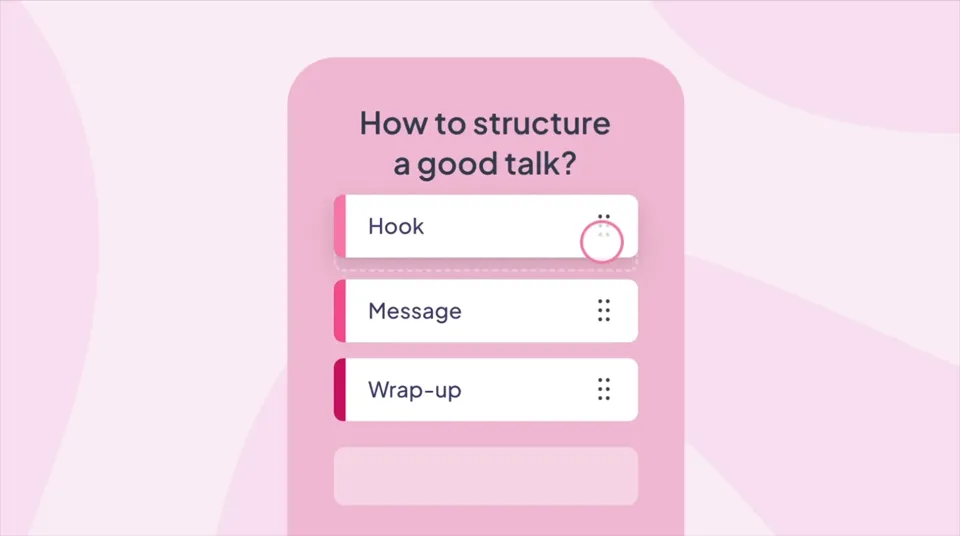
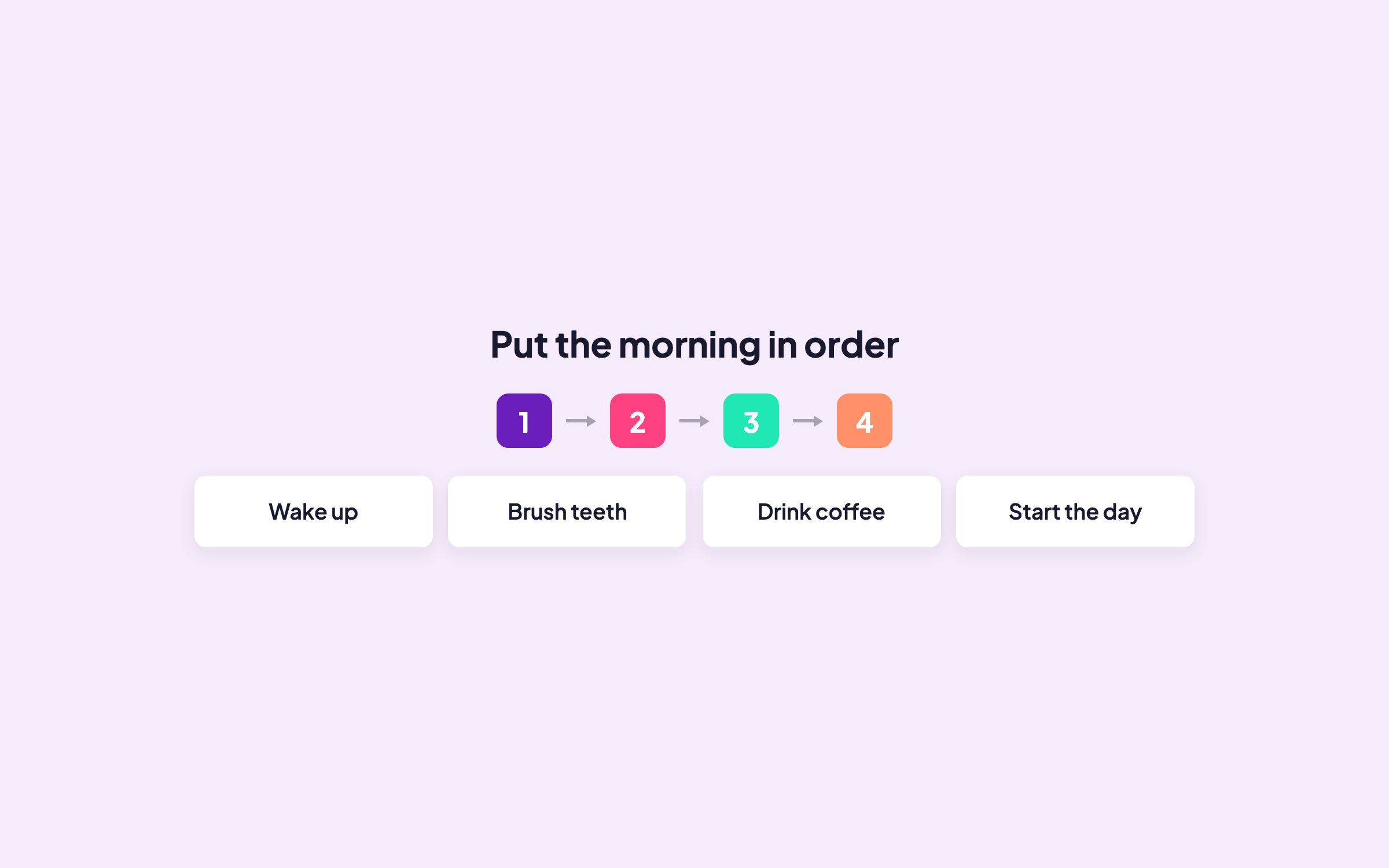
Correct Order is the drag-to-sequence quiz slide: historical timelines, process steps, size rankings, priority orders. Audiences reorder a shuffled list on their phone; the leaderboard scores who nailed the sequence fastest. It is the format that makes memorising "what comes after what" feel like a race instead of a chore.
How Correct Order works
Correct Order is a single scored slide with one job, to test that your audience knows the right sequence:
- Enter the items in the correct order and set a time limit: AhaSlides shuffles them for the audience.
- Share the join code; audiences see the shuffled list on their phone and drag to reorder.
- The presenter view shows the leaderboard live as answers come in.
- Reveal the correct sequence at the end with a full breakdown of who got it right.
Best for
Correct Order fits any subject where the answer is not "what" but "in what order":
- Teachers: historical event timelines, life-cycle stages, algebraic step ordering.
- Corporate trainers: SOP walkthroughs, escalation processes, sales-cycle stage recall.
- Onboarding leads: day-one process quizzes, "what happens when a ticket comes in" sequencing.
- Event hosts: pop-culture trivia (album release order, movie sequels, chart rankings).
Why teams love Correct Order
Correct Order sticks around because the format tests something multiple choice cannot:
- Sequence recall: knowing the order is different from recognising the items; this format proves both.
- Every attempt is unique: the shuffled starting order means the answer is never given away.
- Scored on speed AND accuracy: the leaderboard rewards decisive knowledge, not slow guessing.
- Perfect for timelines: the one quiz format built specifically for "when did X happen relative to Y".
Free to build, live to play, and the sharpest way to test whether the sequence really stuck.

